
What matters for cervical cancer prevention is the presence of a cervix and individual risk factors, not legal gender.
The cervix is the lower, narrow part of the uterus that opens into the vaginal canal. It is present in people who were born with it, unless it has been surgically removed.
|
|
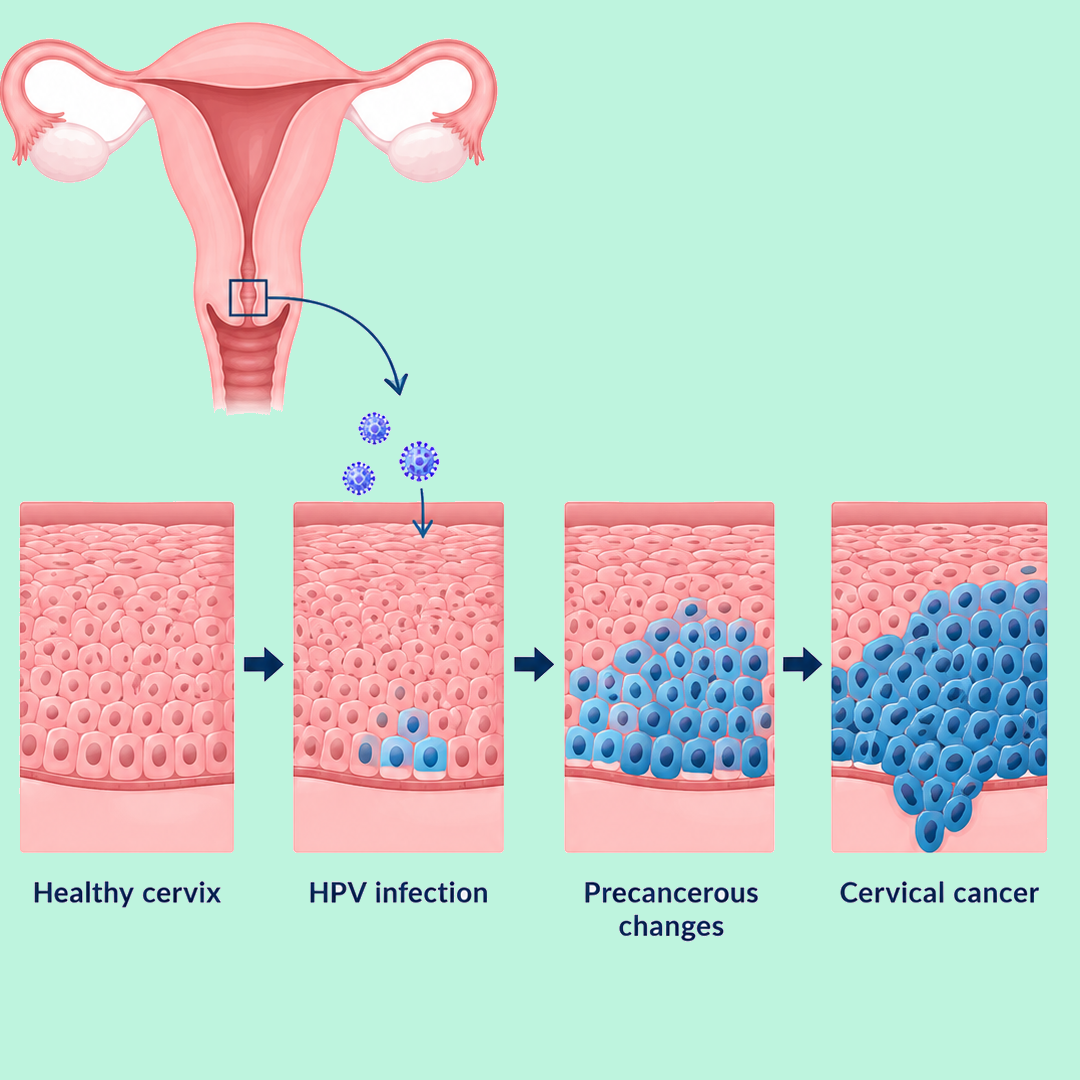
Almost all cervical cancers are caused by persistent infection with high-risk types of the human papillomavirus (HPV). HPV vaccination can therefore prevent many cases of cervical cancer. HPV vaccination is recommended starting at age 9 to protect against infections that can cause cervical and other cancers later in life. People who were not vaccinated earlier can still receive the vaccine, free of charge, up to age 30. |
The HPV vaccine protects against many, but not all, cervical cancers. For this reason, everyone with a cervix aged 25–64 should have regular cervical screening, even if they have been vaccinated.
Cervical screening is recommended:
- Every 3 years for people aged 25–29 (using a Pap smear)
- Every 5 years for people aged 30–64 (using an HPV DNA test)
More information is provided below.
What is the Human Papillomavirus (HPV)?
Cervical cancer is almost always caused by the human papillomavirus (HPV). There are more than 100 types of this virus:
- Low-risk types cause warts on the skin or mucous membranes.
- High-risk types can cause cancer.
This virus can be transmitted through sexual contact. Anyone who has (ever) been sexually active can contract it. HPV can be passed between partners regardless of gender and sexual orientation, including through vaginal, anal, or oral sex, genital skin-to-skin contact, or by sharing sex toys.
HPV is so common that more than 80% of sexually active people will acquire an HPV infection at some point in their lives. In most people, the infection clears on its own. In a small proportion of people, the infection persists and can cause abnormal changes in the cells of the cervix that may develop into cervical cancer over 10–15 years. Because these abnormal cell changes usually develop slowly, regular cervical screening can detect and treat them before they become cancer.
Important to know:
- Condoms reduce the risk of HPV transmission but do not provide complete protection. This is because HPV is transmitted through intimate skin-to-skin contact, including areas that are not covered by a condom.
- The HPV vaccine protects against many, but not all, HPV types that can cause cancer. For this reason, everyone with a cervix aged 25–64 should have regular cervical screenings, even if they have been vaccinated. For more information see the "Should I get the HPV vaccine?" point.
Should I get the HPV vaccine?
HPV vaccination is recommended at different ages depending on vaccination history and individual risk factors.
- Children in the first year of secondary education are routinely offered HPV vaccination free of charge through the school vaccination program.
- Young people up to 30 years old who were not vaccinated through the school program can still benefit from catch-up vaccination. From 1 June 2026, people aged 19–30 are eligible for a reimbursed vaccination through the Belgian health insurance system. Ask your healthcare provider for a prescription and advice on how to receive the vaccine.
- Some adults up to 45 years of age, including immunocompromised individuals and, in certain cases, people treated for high-grade cervical precancer, may also benefit from HPV vaccination and may be eligible for reimbursement. Discuss your individual eligibility with your healthcare provider.
Depending on your age when you start vaccination and your previous vaccination history, two or three doses may be required.
If you are unsure about your HPV vaccination history, consult your digital vaccination record or ask your GP to check your vaccination status.
What is cervical cancer screening?
Regardless of legal gender registration, people aged 25–64 who have a cervix and are affiliated with a Belgian health insurance fund are eligible for reimbursed cervical screening, even if they do not receive an invitation from the organized screening programme, provided the recommended screening interval is respected:
- Pap smear every 3 years for people aged 25–29.
- HPV DNA test every 5 years for people aged 30–64.
In Flanders, legal sex registration affects whether you automatically receive an official letter from the Centre for Cancer Detection (CvKO):
- People legally registered as women aged 25–64 automatically receive a letter reminding them to schedule a cervical screening appointment.

Source: Center for Cancer Detection (CvKO), 2026
- People legally registered as men do not automatically receive this letter. However, if they have a cervix, they are still eligible for reimbursed cervical screening and are recommended to arrange the test at the appropriate interval.
A cervical screening test can be performed by a general practitioner or a gynaecologist.
The reimbursement covers the cervical smear; consultation fees are not included
Keep in mind that:
Screening reduces but does not eliminate the risk of cancer. It is important to be aware of changes in the chest area and seek care promptly if new symptoms arise between screening rounds.
I have a weakened immune system
People with weakened immune systems (for example, people living with HIV, organ transplant recipients, or those receiving long-term immunosuppressive treatment) are less likely to clear HPV infections naturally. As a result, they have a higher risk of persistent HPV infection, cervical precancer, and HPV-related cancers. For this reason:
HPV vaccination is especially important, and cervical cancer screening may need to start at a younger age and/or be performed more frequently than in the general population.
In Belgium, catch-up vaccination is available free of charge up to age 45 for immunocompromised individuals who have not been vaccinated previously. Discuss your vaccination options as well as the most appropriate screening schedule with your healthcare provider.
I am younger than 25 / older than 64
Outside the age group 25-64, screening is not routinely offered:
- Below 25 years, screening for cervical cancer is usually not recommended, and therefore it is not reimbursed (except for high-risk groups). Earlier screening may be considered on a case-by-case basis in consultation with a healthcare provider.
- Above 64 years cervical screening may still be recommended in some cases, depending on individual risk and after discussion with a healthcare provider. A one-off screening test is also reimbursed if no cervical screening has been reimbursed in the past 10 years.
Gender-affirming genital surgery for AFAB anatomy
For people who have undergone gender-affirming genital surgery for AFAB anatomy, the need for cervical cancer screening depends on whether the cervix is still present.
Some types of gender-affirming surgery, particularly those involving closure of the vaginal canal, often include removal of the uterus and cervix. However, surgical procedures vary, and not everyone undergoes the same operations. If you are unsure whether your cervix was removed during surgery, ask your healthcare provider.
- If the cervix has NOT been removed, regular cervical cancer screening is still recommended according to the usual screening schedule.
- If the cervix has been completely removed, cervical cancer screening is not recommended. However, other conditions, including cancer affecting nearby tissues, can still occur, so it is important to seek medical advice promptly if you notice any unusual symptoms.
- If only part of the cervix has been removed, follow-up recommendations may differ. Please refer to the section "I have a history of cervical cancer".
I have a history of cervical cancer
The information reported on this page applies to routine cervical cancer screening in the general population. People with a history of high-grade cervical precancer (e.g. CIN2, CIN3 or AIS) or cervical cancer usually follow a personalized surveillance plan agreed upon with their specialist. This may include more frequent testing for several years after treatment, regardless of whether treatment preserved the cervix, removed part of it, or involved complete removal of the cervix. They should follow the recommendations of their healthcare provider rather than the routine screening schedule described here.
Please note, a history of genital warts alone does not usually change the recommended screening schedule.
Testosterone therapy and cervical cancer screening
Gender-affirming therapy with testosterone may cause thinning and drying of the genital and cervical tissues (atrophy), which can make cervical screening more uncomfortable and may occasionally lead to inadequate or difficult-to-interpret cervical swab results.
If you are using testosterone, let your healthcare provider know before your cervical screening. This allows them to:
- adapt the examination to reduce discomfort (for example, by using extra lubricant, a smaller speculum, or allowing more time); and
- inform the laboratory that you are using testosterone, helping to ensure that your cervical swab is interpreted correctly.
Impact of gender registration on access to HPV vaccine and/or cervical cancer screening in Flanders
Read more here.
What to do in case of symptoms or increased risk
The breast cancer screening program is designed for people without symptoms and at average risk of cervical cancer.
If you develop any symptom (for example, blood loss during or shortly after intercourse, between two periods, or after menopause), if you are at increased risk of cervical cancer (for example, because of a known persistent high-risk HPV infection, previous cervical precancer, or a weakened immune system, such as people living with HIV or those taking immunosuppressive medication), you should discuss this with your GP or specialist. Your healthcare provider can advise whether you need further assessment or whether screening outside the organised program is more appropriate.
If you have symptoms or an increased risk, do not wait for your next screening invitation before seeking medical advice.
General Considerations
The information in this website is meant to provide general guidance and education. It cannot replace a medical consultation that takes into account a person’s medical history, risk factors, and preferences.
Screening is a very helpful prevention strategy, but it also has limitations and possible downsides that are important to discuss together with a healthcare provider.