
What matters for breast cancer screening is the presence of breast tissue and individual risk factors, not legal gender.
Breast tissue consist of glands that can produce milk, fat and other tissues. It is present in people who:
- develop it during puberty, or
- develop it after long-term use of estrogens (e.g. a transfeminine person who received estrogens for 5 or more years).
Breast cancer screening is usually recommended for people with breast tissue aged 50 to 69, with a mammography every two years, unless a healthcare provider advises otherwise.
More information is provided below.
Do I need breast cancer screening?
Breast tissue consist of glands that can produce milk, fat and other tissues. A significant amount of breast glandular tissue (requiring regular breast cancer screening) is present in people who:
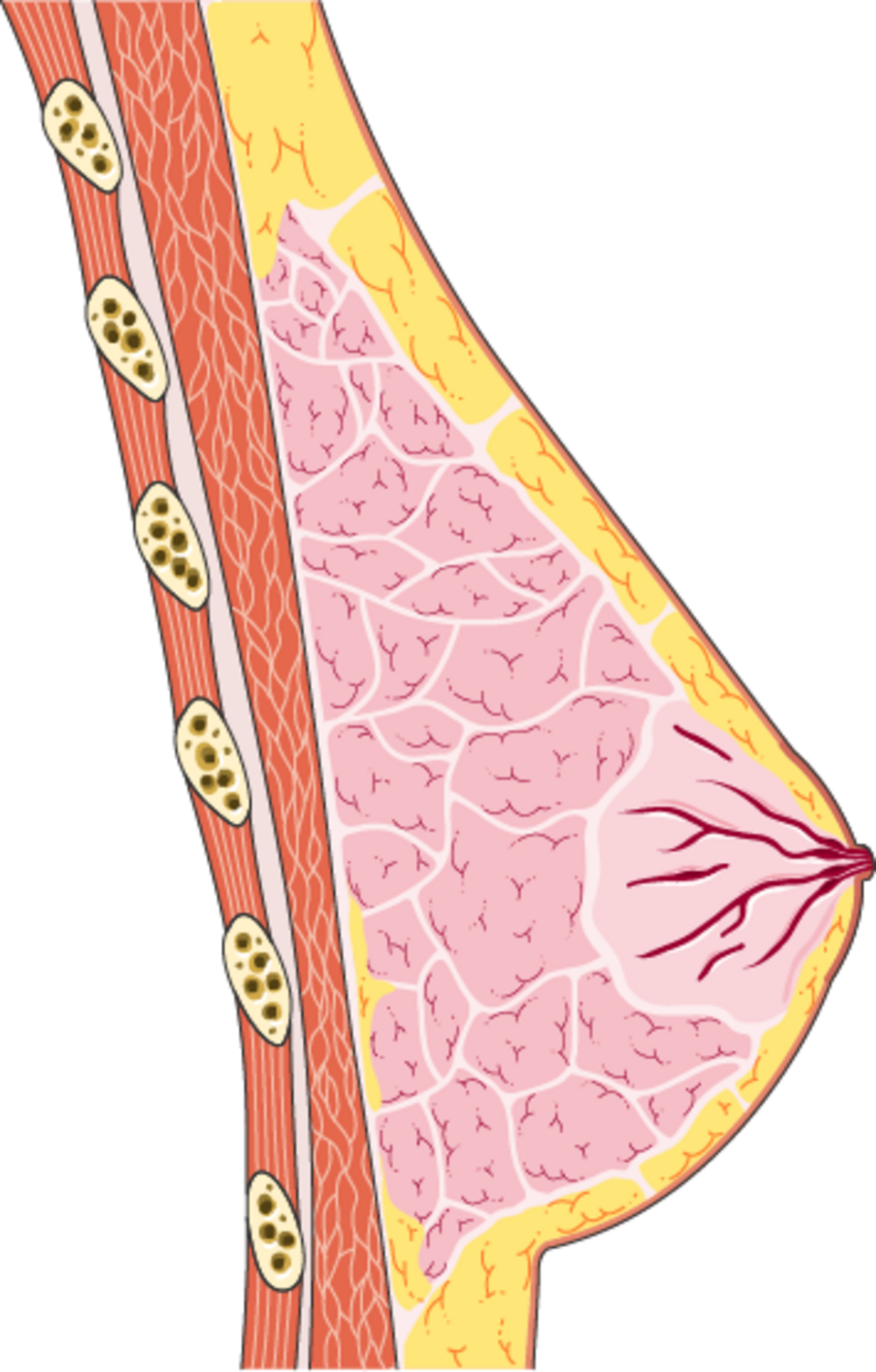 Source: Laboratoires Servier, SMART–Servier Medical Art, licensed under CC BY-SA 3.0, via Wikimedia Commons. Source: Laboratoires Servier, SMART–Servier Medical Art, licensed under CC BY-SA 3.0, via Wikimedia Commons. |
OR
AND
|
If breast tissue was removed surgically, see the “Gender-affirming top surgery" point.
If glandular tissue has never developed (either during puberty or as a result of prolonged estrogen exposure) routine breast cancer screening is generally not indicated. This does not mean that risk is zero, but available evidence suggests a very low risk in this situation. Additional evaluation by an healthcare provider may be appropriate in the presence of strong family history or known genetic risk factors (e.g., BRCA mutations).
What is breast cancer screening?
Regardless of legal gender registration, breast cancer screening with mammography every two years is recommended for all people aged 50–69 who have a significant amount of breast glandular tissue (whether developed during puberty or after 5 or more years of estrogens use), unless a healthcare provider advises otherwise.
In Flanders, however, legal gender registration affects whether mammography is arranged through the organized screening program or outside it:
- People legally registered as women:
People aged 50–69 who are legally registered as women are automatically invited to participate in the organized breast cancer screening program. The Centre for Cancer Detection (CvKO) sends an invitation letter that serves as the prescription for the mammography, containing the date, time, and location of the appointment.
-

Source: Center for Cancer Detection (CvKO), 2026
-
People legally registered as men:
People aged 50–69 who are legally registered as men do not automatically receive an invitation from the organized screening programme. However, those who have sufficient breast glandular tissue may still be eligible for reimbursed mammography and are recommended to undergo screening every two years.
Keep in mind that:
Screening reduces but does not eliminate the risk of cancer. It is important to be aware of changes in the chest area and seek care promptly if new symptoms arise between screening rounds.
I am younger than 50 / older than 69
Outside the age group 50-69, screening is not routinely offered:
- Below 50 years, screening may be considered on a case-by-case basis, in consultation with an healthcare provider, in the presence of elevated risk, such as significant family history of breast cancer or known genetic predisposition.
- Above 69 years, continued mammography surveillance may also be considered on a case-by-case basis, in consultation with an healthcare provider, depending on overall health status and risk profile.
Gender-affirming top surgery (chest masculinization)
For people who have undergone bilateral chest surgery (removal of most breast tissue) for gender affirmation, routine breast cancer screening is generally not recommended.
However, it is recommended that a thorough breast cancer risk assessment is performed by a healthcare provider, either before or after surgery, to help determine whether occasional imaging tests are needed. This assessment may consider personal and family history of breast cancer, any known genetic risk factors, and details of the surgical technique used.
Why? Surgery greatly reduces the risk of breast cancer, but it does not remove the risk completely, because a small amount of breast tissue may remain depending on the surgical technique used.
Breast cancer after chest masculinization is very rare, but it has been reported. For this reason, it’s important to stay aware of any changes in the chest area and, if they arise, share them immediately with your provider.
Estrogen therapy and breast cancer screening
Breast cancer screening is recommended for all individuals with breast tissue, regardless of whether that tissue was developed during puberty or following estrogen therapy.
Evidence indicates that individuals who develop breast tissue after at least five years of estrogen therapy have a breast cancer risk that is closer to that of people who developed breast tissue during puberty, although it generally remains somewhat lower.
I have breast implants
The presence of breast implants does not contraindicate mammography.
Breast implants placed for cosmetic reasons are usually inserted underneath the existing glandular tissue (whether that tissue developed during puberty or through estrogen use) and do not reduce the amount of breast tissue present. For this reason, people with implants should follow the usual breast cancer screening recommendations appropriate for their age and level of breast tissue.
It is important to inform the radiology provider about the presence and type of implant, so that specific imaging techniques can be used.
I have a history of breast cancer
The information reported on this page applies to routine breast cancer screening in the general population. People with a prior diagnosis of breast cancer usually follow a personalized surveillance plan with their specialist, rather than surveillance within the organized screening program, in the first 10 years after diagnosis. This approach allows appropriate follow-up in light of prior medical treatments, radiotherapy or surgery.
After 10 years of remission, people with residual breast tissue may resume standard mammography surveillance (typically every two years between ages 50 and 69), unless your healthcare provider advises a different schedule.
Impact of gender registration on access to breast cancer screening in Flanders
Read more here.
What to do in case of symptoms or increased risk
The breast cancer screening program is designed for people without symptoms and at average risk of breast cancer.
If you develop any symptom or notice changes in the chest area (for example, a recent withdrawal of the nipplle or the areola, a lump in the chest or armpit cavity, a change in the skin color/texture, a change in the shape or size of the breast, fluid or blood loss from one of the nipples), or if you have an increased risk of breast cancer (family history or known genetic risk factors, such as BRCA mutations), it is important to discuss this with your GP or specialist. Your healthcare provider can advise whether you need further assessment or whether screening outside the organised program is more appropriate.
If you have symptoms or an increased risk, do not wait for your next screening invitation before seeking medical advice.
General Considerations
The information in this website is meant to provide general guidance and education. It cannot replace a medical consultation that takes into account a person’s medical history, risk factors, and preferences.
Screening is a very helpful prevention strategy, but it also has limitations and possible downsides that are important to discuss together with a healthcare provider.